The Future of Production is Hyperlocal and Open Source
Diploma Project · 2024
- Speculative Design
- Local Manufacturing

A speculative look at how we might design, manufacture and source materials for products locally.
Challenge
Global industrial production is built on a logic that separates making from consequence, geographically, economically, and ethically. Increasing instances of horrendous consequences to the way we manufacture products, through exploitation, inconsideration for people and the planet. The project began with this rupture as its premise. The challenge was not to solely critique existing production from the outside, but to also propose and evaluate an alternative: what if the resources used to make something had to come from within five kilometres of where it was made?
Process
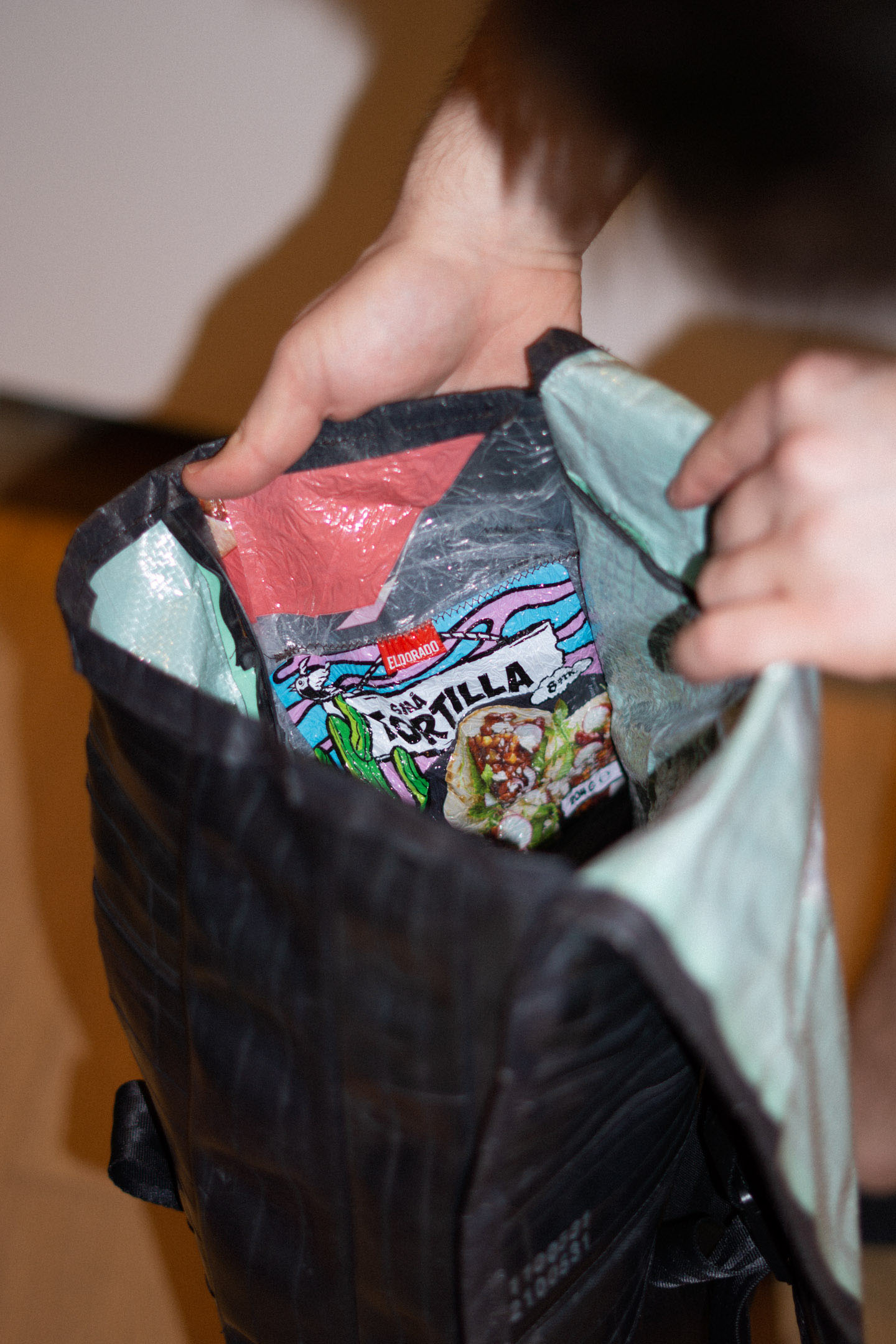
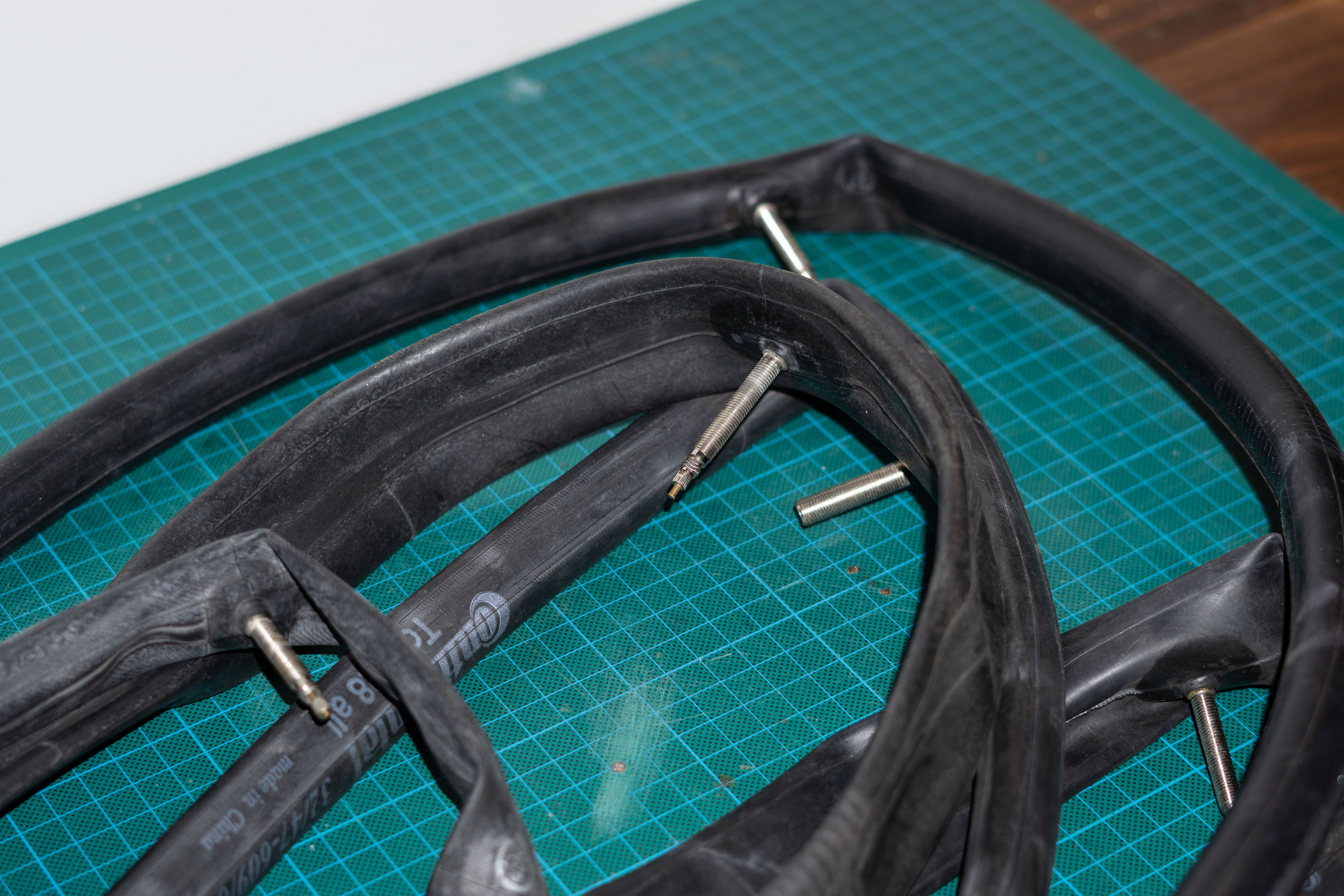
The research looked at three interconnected areas: production systems, materials, and knowledge. A framework for hyperlocal production was developed, defining the 5km radius (hyperlocal) one that makes supply chains legible and accountability less avoidable. Three hyperlocal environments were mapped (forest and farmland, sea and coast, urban) and a five-factor evaluation matrix was built to assess local materials across environmental sustainability, social sustainability, longevity and degradability, aesthetic properties, and degree of processing required. Hemp was studied as a case study material. The process culminated in a physical proof-of-concept: a backpack constructed entirely from materials sourced within 5km of central Oslo (bicycle inner tubes from local repair shops, heat-welded HDPE milk caps repurposed as a clasp, and woven consumer plastic packaging). Modern technology was used in the development, Clo3D alongside traditional sketching.
Outcome
The diploma produced two things: a conceptual framework for evaluating materials in a hyperlocal production context, and a working backpack that proves the framework is not purely theoretical. The object is imperfect but perhaps deliberately so, it helps tell a story, of how it's made and by whom. The project closes with an argument for open-source knowledge sharing as the necessary accelerant for this kind of practice: hyperlocal production scales not through centralisation but through distributed expertise. The work also proposes a broader redefinition of value, one that holds social, environmental, and cultural dimensions alongside the economic, and asks whether design that ignores those dimensions can be considered fully designed at all.
Gallery




Next project
Chair